Original source
Eric Ripert's First Time Eating in China | Anthony Bourdain Parts Unknown
Sichuan Food Guide: Chengdu Dining to Leshan Buddha and Baijiu Culture
Anthony Bourdain says it plainly in the first thirty seconds. He loves Sichuan, he loves the food, and he also loves torturing his friend Eric Ripert. Ripert runs Le Bernardin in New York, holds three Michelin stars, is a serious practitioner of Tibetan Buddhism, and is so relentlessly polite that...
Anthony Bourdain says it plainly in the first thirty seconds. He loves Sichuan, he loves the food, and he also loves torturing his friend Eric Ripert. Ripert runs Le Bernardin in New York, holds three Michelin stars, is a serious practitioner of Tibetan Buddhism, and is so relentlessly polite that Tony reckons you could pull his toenails out and he would still find something kind to say. He has also never set foot on mainland China. So Tony brings him to the one province in the country built to undo him.
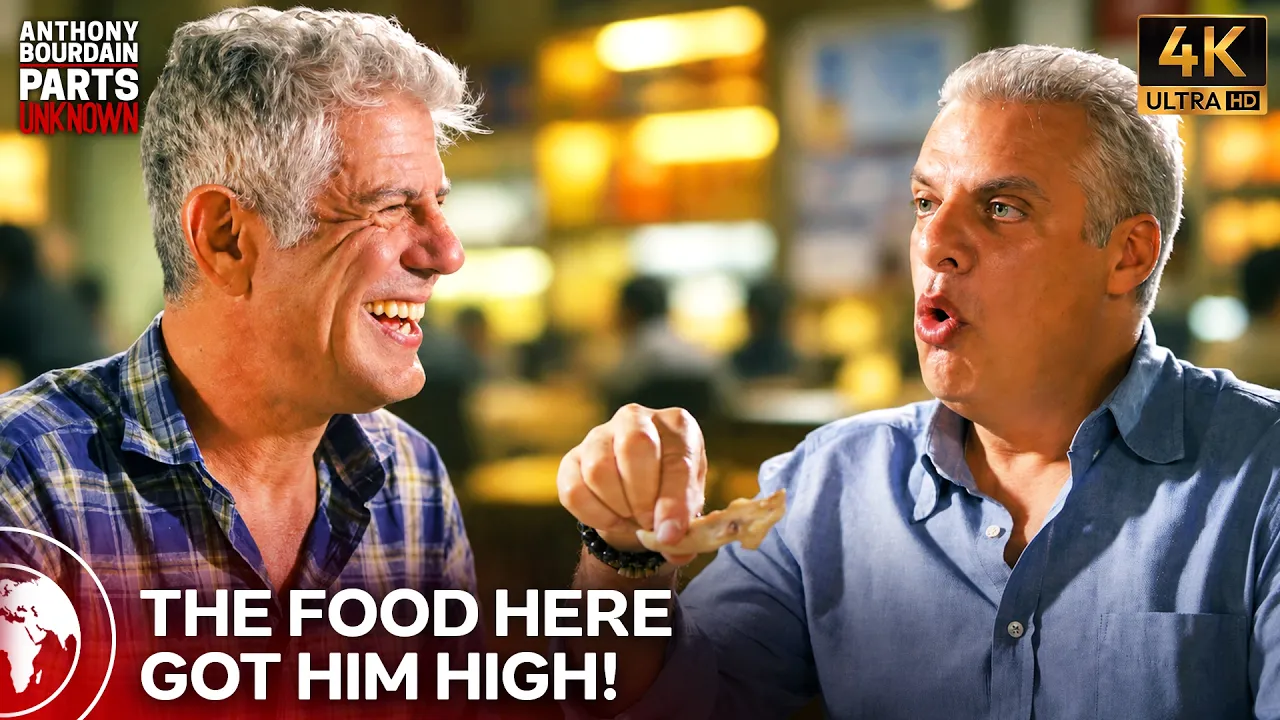
Sichuan food works on two axes: la, the straightforward heat of the chilies, and ma, the floral, tingling, mind-scrambling numbness of the Sichuan peppercorn. Over one week Ripert gets both, repeatedly. Dan dan noodles before noon. Pickled chicken feet and la zi ji, a dish that is less a plate of chicken than a search party through a mountain of dried chilies. Mapo doufu, Tony’s favourite dish in all of Sichuan. Green peppercorn fish finished with a pour of boiling oil. Somewhere in the middle of it Ripert puts down his chopsticks and reports that his face appears to be changing shape and that he feels, as far as he can tell, high. He says he likes it.
Then it escalates. Rabbit heads from a street stall, split open for the brains. Hot pot with a table of local friends, the kind that runs four hours while the broth at the bottom cooks down into something closer to lava. There are quieter hours too. At Leshan, two hours south of Chengdu, the pair stand under the largest stone Buddha in the world, carved into a cliff in 713, and Tony steps back and lets his friend pray. And at Yu Zhi Lan, writer Fuchsia Dunlop — the first foreigner ever to train at the Sichuan Higher Institute of Cuisine — shows them what chef Lan Guijun does when peasant dishes are rebuilt as banquet cooking. Chinese food, she argues, is the most underrated cuisine on earth.
It ends the way Tony warned Ripert it would, at a distillery that has been making baijiu for over five hundred years, where refusing a toast is not an option and the toasts come one guest at a time. Ripert, undone, raises his glass and tells his friend he will remember this forever. The next morning they take a train to the countryside, eat pig intestine, and argue about which CNN anchor would look best in a Speedo.
Travel the globe with the legendary chef, author, and storyteller Anthony Bourdain as he uncovers the soul of a destination through its food, culture, and politics. Far more than just a cooking show, Parts Unknown dives deep into the corners of the world rarely seen on TV—eating with locals, exploring diverse culinary rituals, and asking the hard questions.
Anthony Bourdain brings chef Eric Ripert of New York three-Michelin-star Le Bernardin to Sichuan Province for his first visit to mainland China. Starting with dan dan noodles before noon in Chengdu, Ripert faces the two axes of Sichuan flavor: la, the heat of chilies, and ma, the numbing tingle of Sichuan peppercorn. Over one week the pair eat pickled chicken feet and la zi ji, then mapo doufu, which Tony calls the apex of Sichuan food, and green peppercorn fish finished with boiling oil. They stand under the Leshan Giant Buddha, the largest stone Buddha in the world, carved into a cliff in 713, where the Buddhist Ripert prays. Rabbit heads split open for the brains come from a street stall, then a four-hour Sichuan hot pot with local friends. Writer Fuchsia Dunlop, the first foreigner to study at the Sichuan Higher Institute of Cuisine, takes them to chef Lan Guijun's restaurant Yu Zhi Lan, where peasant dishes are rebuilt as refined banquet cooking and she argues Chinese is.
Anthony Bourdain says it plainly in the first thirty seconds. He loves Sichuan, he loves the food, and he also loves torturing his friend Eric Ripert. Ripert runs Le Bernardin in New York, holds three Michelin stars, is a serious practitioner of Tibetan Buddhism, and is so relentlessly polite that Tony reckons you could pull his toenails out and he would still find something kind to say. He has also never set foot on mainland China. So Tony brings him to the one province in the country built to undo him.
Sichuan food works on two axes: la, the straightforward heat of the chilies, and ma, the floral, tingling, mind-scrambling numbness of the Sichuan peppercorn. Over one week Ripert gets both, repeatedly. Dan dan noodles before noon. Pickled chicken feet and la zi ji, a dish that is less a plate of chicken than a search party through a mountain of dried chilies. Mapo doufu, Tony’s favourite dish in all of Sichuan. Green peppercorn fish finished with a pour of boiling oil. Somewhere in the middle of it Ripert puts down his chopsticks and reports that his face appears to be changing shape and that he feels, as far as he can tell, high. He says he likes it.
Then it escalates. Rabbit heads from a street stall, split open for the brains. Hot pot with a table of local friends, the kind that runs four hours while the broth at the bottom cooks down into something closer to lava. There are quieter hours too. At Leshan, two hours south of Chengdu, the pair stand under the largest stone Buddha in the world, carved into a cliff in 713, and Tony steps back and lets his friend pray. And at Yu Zhi Lan, writer Fuchsia Dunlop — the first foreigner ever to train at the Sichuan Higher Institute of Cuisine — shows them what chef Lan Guijun does when peasant dishes are rebuilt as banquet cooking. Chinese food, she argues, is the most underrated cuisine on earth.
It ends the way Tony warned Ripert it would, at a distillery that has been making baijiu for over five hundred years, where refusing a toast is not an option and the toasts come one guest at a time. Ripert, undone, raises his glass and tells his friend he will remember this forever. The next morning they take a train to the countryside, eat pig intestine, and argue about which CNN anchor would look best in a Speedo.
Travel the globe with the legendary chef, author, and storyteller Anthony Bourdain as he uncovers the soul of a destination through its food, culture, and politics. Far more than just a cooking show, Parts Unknown dives deep into the corners of the world rarely seen on TV—eating with locals, exploring diverse culinary rituals, and asking the hard questions.
Tony Bourdain loves Sichuan, its food, and torturing his relentlessly polite friend Eric Ripert, chef of New York's three-Michelin-star Le Bernardin and a serious practitioner of Tibetan Buddhism, who has never been to mainland China. Sichuan Province, in southwest China over a thousand miles from Beijing, is called China's bread basket, and its capital Chengdu keeps deep culinary roots despite its growing skyline. At a Chengdu noodle spot famous for dan dan noodles they eat at 11:20 in the morning; Ripert finds it spicy but awesome. Bourdain warns that drinking culture is very important here: at formal meals your ability to drink leads to assumptions, and you cannot refuse a toast. He explains the two elements of Sichuan flavor: ma, the flowery, tingling, mouth-numbing effect of the Sichuan peppercorn, and la, the pure heat of chilies like the er jing tiao or the hotter facing heaven chili. Both agree MSG fears are a lie, noting natural MSG in tomatoes, breast milk and parmesan. Dinner arranged with the man who runs the Sichuan Cuisine Museum at a neighborhood favorite brings pickled chicken feet, la zi ji, literally spicy chicken but practically a game of finding chicken bits in a mountain of chilies, and mapo doufu, the pockmarked granny tofu with ground pork, bean curd, chili oil, bean paste, garlic shoots and ground Sichuan peppercorns, which Bourdain calls the apex of Sichuan food. Green peppercorn fish in seasoned broth laced with fresh and dried green peppercorns is finished with a pour of boiling vegetable oil; Ripert reports feeling like his face is changing shape and that he is high, and he likes it. About two hours south of Chengdu, at the confluence of three rivers, stands the Leshan Giant Buddha, carved out of the cliff in 713, still the largest stone Buddha in the world; Eric, a Buddhist, prays while Tony steps back respectfully. At a street stall they eat the famous Sichuan rabbit heads: rip off the jaw, split the skull, suck out the brain. A four-hour hot pot with local friends uses a divided pot, a neutral broth inside and the fiery stuff outside; ingredients like tripe, thousand-layer stomach, tofu, seaweed and duck blood go in, and as it cooks down the heat intensifies, locals sometimes going four hours. Writer Fuchsia Dunlop, who arrived in Chengdu as a student in 1994 and was the first foreigner to study at the Sichuan Higher Institute of Cuisine, brings them to chef Lan Guijun's restaurant Yu Zhi Lan, where Sichuan food is raised to refined banquet cookery: cold dishes like lily buds scented with rose petals, braised beef shank with chili oil, tea tree mushrooms, strange-flavor noodles mixing sweet, sour, salty, spicy, numbing and nutty, impossibly thin hand-cut duck-egg noodles on rich chicken-pork broth, and Dalian sea cucumber in a Sichuan sour-hot dressing, a banquet version of a street dish. Dunlop argues Chinese is the world's most underrated cuisine, spanning banquet, peasant, street, Buddhist vegetarian, Muslim and minority cooking. In a park, Eric gets street-side ear cleaning and neck massage; Bourdain takes a cooking class making fish-flavored shredded pork in a fierce wok. The finale is baijiu at the Shui Jing Fang distillery, which has made the spirit for over 500 years: premium baijiu is for entertaining important guests, you start with three cups together, then toasts go one by one, and hosts entertain like this two or three days a week. Ripert, undone, tells Tony he will remember it forever. The next morning they take a train about 150 kilometers from Chengdu to the countryside, where the area is famous for pig intestine, eaten at a nong jia le, a rural family-happiness restaurant with fishing, views and mahjong.
Anthony Bourdain brings chef Eric Ripert of New York three-Michelin-star Le Bernardin to Sichuan Province for his first visit to mainland China. Starting with dan dan noodles before noon in Chengdu, Ripert faces the two axes of Sichuan flavor: la, the heat of chilies, and ma, the numbing tingle of Sichuan peppercorn. Over one week the pair eat pickled chicken feet and la zi ji, then mapo doufu, which Tony calls the apex of Sichuan food, and green peppercorn fish finished with boiling oil. They stand under the Leshan Giant Buddha, the largest stone Buddha in the world, carved into a cliff in 713, where the Buddhist Ripert prays. Rabbit heads split open for the brains come from a street stall, then a four-hour Sichuan hot pot with local friends. Writer Fuchsia Dunlop, the first foreigner to study at the Sichuan Higher Institute of Cuisine, takes them to chef Lan Guijun's restaurant Yu Zhi Lan, where peasant dishes are rebuilt as refined banquet cooking and she argues Chinese is.
Bourdain guides first-timer Eric Ripert through Sichuan's heat and numbness, from dan dan noodles to baijiu toasts.
Sichuan Food Guide: Chengdu Dining to Leshan Buddha and Baijiu Culture
3:16 Start a Chengdu food trip with noodles: the city is famous for small shops serving dan dan noodles, and locals eat them even before noon, making an easy first stop for newcomers to Sichuan flavors.
4:17 Drinking culture is very important in Sichuan. At formal meals you cannot reasonably refuse toasts, and being visibly drunk at the table is accepted, so pace yourself through a long banquet.
5:19 Learn the two axes of Sichuan flavor before ordering: la is the pure heat of chilies like er jing tiao and facing heaven chili, while ma is the flowery, tingly, mouth-numbing effect of the Sichuan peppercorn.
7:39 La zi ji is literally spicy chicken, but practically a game of fishing small bits of fried chicken out of a mountain of dried chilies, so dig patiently rather than expecting a normal plate of meat.
15:33 Sichuan hot pot works by ordering many ingredients such as tripe, tofu, seaweed and noodles and cooking them yourself; the divided pot has a neutral broth in the inner ring and the fiery stuff outside, so start mild.
17:24 As a hot pot cooks down the broth gets stronger and the heat more intense; locals sometimes sit for four hours, so dig carefully near the bottom where the spice sediment gathers.
34:47 Premium baijiu is served when entertaining important guests, and tradition starts with three cups drunk together before toasts go one by one; refuse nothing if you are the guest of honor.
38:01 Never eat the western breakfast at a hotel in China, Bourdain insists; skip it and find local noodles or street food instead before a day of travel or train rides.
39:09 Weekends, Chengdu residents head to the countryside for nong jia le, rural family-happiness restaurants that serve local dishes alongside fishing, views and mahjong, a good day trip out of the city.
29:21 Street-side ear cleaning is offered in Chengdu parks alongside tea; practitioners sanitize their tools after every customer, and a session includes scraping, a rush, and often a neck massage.
0:00 Intro: Bourdain on Sichuan and Ripert
1:15 Sichuan Province and Chengdu intro
3:16 Dan dan noodles before noon
5:19 Ma and la: peppercorn and chili
6:45 Family dishes and chicken feet dinner
8:41 Mapo doufu, Bourdain's favorite
9:55 Green peppercorn fish with boiling oil
11:22 Leshan Giant Buddha visit
12:54 Rabbit heads from a street stall
15:02 Sichuan hot pot with local friends
21:42 Fuchsia Dunlop and Yu Zhi Lan banquet
28:20 Ear cleaning in the park
30:22 Cooking class: fish-flavored pork
33:21 Baijiu toasts at Shui Jing Fang
37:50 Train to the countryside, pig intestine
What are the two defining flavor elements of Sichuan cooking?
La is the pure heat of chilies such as er jing tiao and the hotter facing heaven chili, while ma is the flowery, tingly, mouth-numbing effect of the Sichuan peppercorn.
What is mapo doufu?
A legendary Sichuan tofu dish, 'pockmarked granny tofu', made with ground pork or beef, bean curd, chili oil, bean paste, garlic shoots, ground Sichuan peppercorns and MSG; Bourdain calls it the apex of Sichuan food and his absolute favorite.
How big is the Leshan Giant Buddha and when was it carved?
It was carved out of the cliff wall in 713, about two hours south of Chengdu at the confluence of the Minjiang, Dadu and Qingyi rivers, and still stands as the largest stone Buddha in the world.
How do you eat Sichuan rabbit heads?
You rip off the jaw, crack and split the skull, eat the spicy meat clinging to the bone, then suck out the chicklet-sized brain, which locals say is unlike custardy creamy brains.
How does a divided Sichuan hot pot work?
You order many ingredients and cook them yourself; the inner ring holds a more neutral broth and the outer ring holds the fiery one, and as it cooks down over hours the heat intensifies.
Who is Fuchsia Dunlop and why does she matter for Sichuan food?
She arrived in Chengdu as a student in 1994 and was the first foreigner to study at the Sichuan Higher Institute of Cuisine, writing books considered groundbreaking and definitive on Sichuan food.
What is baijiu drinking etiquette?
Premium baijiu is for entertaining important guests. Tradition starts with three cups drunk together, then toasts proceed one by one, and at hosts like the 500-year-old Shui Jing Fang distillery people entertain like this two or three days a week.
What is 'strange flavor' in Sichuan cuisine?
Guai wei is a mixture of sweet, sour, salty, spicy, numbing and nutty all together, used in traditional dishes like strange-flavor noodles, often done in refined ways at banquet restaurants.
What is a nong jia le?
A rural 'family happiness' business outside the city: a restaurant plus entertainment place where people come to eat, enjoy the view, fish and play mahjong, popular for Chengdu weekend trips about 150 kilometers out.