Travel Guides & Tips in this video
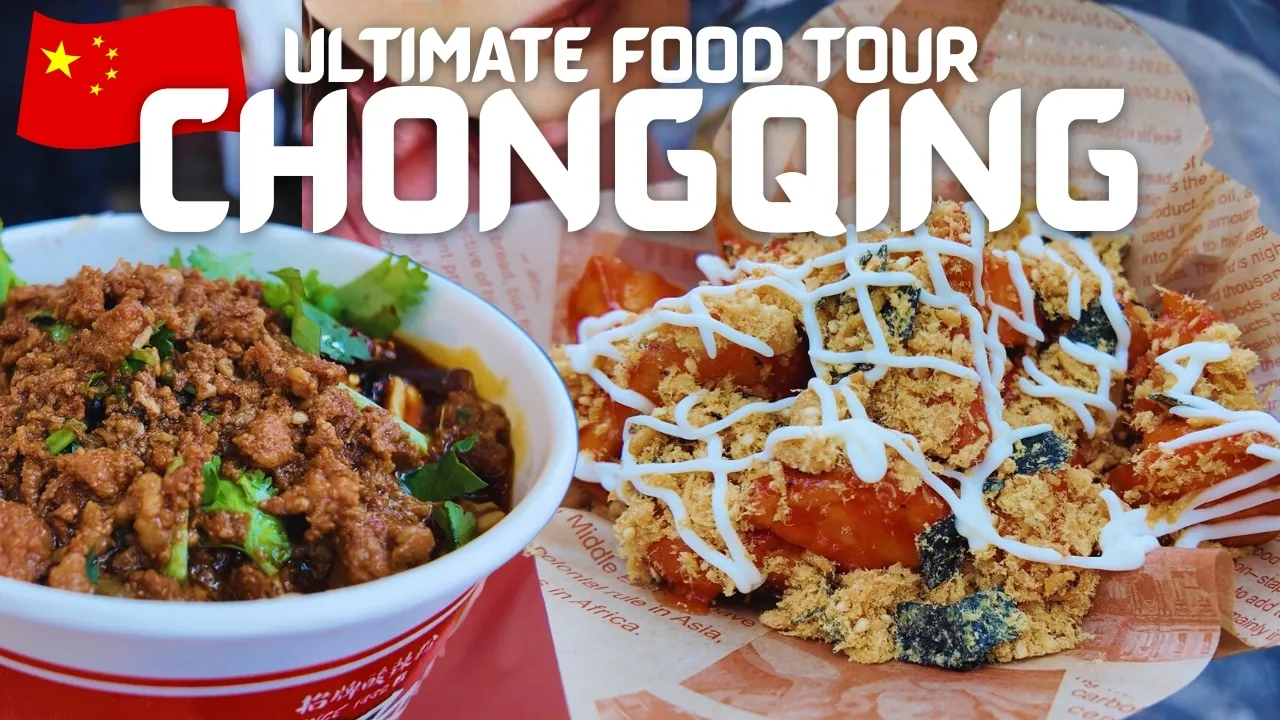
Paula and Henry spend a day sampling Chongqing street food around Jiefangbei. They start with crispy pork skewers, which they order without chili, then try steamed pork buns and buns with salted egg yolk. At another stall, they choose freshly grilled squid and potato skewers. A bakery provides a custard-filled coffee bun and kaya toast, while seasoned potatoes, yogurt with mango and pomegranate, and hot-and-sour noodles add more flavors. The noodles prove intensely spicy, so the couple buy ice-cream sandwiches for relief. They finish with a non-spicy beef noodle soup with braised beef and a soy egg, a comforting end to the food tour.
Next travel video:

More about the current video:()
Crispy pork, steamed buns and skewers
Paula and Henry spend a day exploring street food around Jiefangbei in Chongqing. Their first stop is a stall known as “ghost crispy pork.” After a long queue, they ask for the skewers without chili. The pork comes in a paper bag with sticks; it is warm and crisp, not too oily, and leaves a mild numbing feeling from Sichuan peppercorns. They wonder whether a little more sauce or salt would improve it.
Next, they try steamed buns made in batches by women working continuously at the shop. One is filled with pork that is juicy and tender like braised pork belly; the other combines meat with salted egg yolk, which adds a distinct flavor. The bun fillings and the way they are made become part of the couple’s conversation as they compare the two. At a grilled-skewer stall, they choose squid tentacles and potatoes cooked to order from raw ingredients and served in cups. The made-to-order cooking lets them see the ingredients prepared fresh. The squid is chewy, seasoned with rock salt and a little Sichuan pepper, while the potatoes taste sweeter and more like yam than regular potatoes. They consider adding salt to the potatoes.
Bakery stops and a spicy bowl
A bakery stop brings a coffee bun with an airy interior, crunchy top and custard filling. Paula and Henry also try kaya toast with thin bread, kaya spread and a full stick of butter. They compare the two and prefer the coffee bun, describing it as soft and buttery. Later they sample crispy potatoes topped with pork floss, seaweed and a sauce they later identify as ketchup. The outside is crisp while the center stays soft. A yogurt mango drink with mango, pomegranate pieces and jelly gives them a refreshing break after the fried foods. The fruit and jelly are part of the drink’s texture, alongside its yogurt base.
The hot-and-sour noodles are a Chongqing-style glass noodle dish with minced pork, cilantro, peanuts and generous chili sauce. Henry initially thinks “hot” means temperature, but the chili and Sichuan pepper make his mouth burn and his lips feel swollen. The dish is much hotter than he expects. They return to the earlier bakery for ice-cream sandwiches: a toasted soft bun with cold ice cream helps ease the heat, and matcha is a favorite flavor. The contrast between the warm bread and cold filling gives them a pause before the last dish.
Beef noodles to finish
They finish at a simple eatery with classic beef noodles, a non-spicy soup with braised beef and a soy egg. Paula and Henry consider it one of the best meals of their trip, a comforting contrast to the intense spice earlier in the day. The route moves through different textures and flavors, from crisp pork and tender buns to chewy skewers, fried potatoes, cool yogurt, intensely hot noodles and a mild soup.
FAQs (From the traveler's perspective)
- Q: What were the crispy pork skewers like?
- A: They were called ghost crispy pork and served in a paper bag with sticks. Paula and Henry asked for a non-spicy order and found the pork warm, crisp and not too oily, with a subtle Sichuan peppercorn flavor.
- Q: What were the buns like?
- A: They tried a pork bun and a meat bun with egg yolk. The pork filling was juicy and tender, like braised pork belly, while the salted egg yolk in the other bun added a distinct flavor.
- Q: How spicy were the hot and sour noodles?
- A: The noodles were extremely spicy. Henry thought “hot” meant temperature, but the chili made his mouth burn and his lips feel swollen. The bowl was a signature Chongqing dish, so the heat surprised him.
- Q: What helped with the spicy noodles?
- A: Ice-cream sandwiches helped. The cold ice cream paired with a soft, toasted bun eased the burning feeling in his mouth, and matcha was one of the flavors they liked.
- Q: What was the best meal of the day?
- A: They considered the classic beef noodles at the end one of the best meals. It was a comforting, non-spicy soup with braised beef and a soy egg, a contrast to the earlier spicy dishes.