Travel Guides & Tips in this video
Paula and Henry explore Chengdu through its pandas, public parks, traditional lanes and food. They travel by train and panda-themed bus to the Chengdu Research Base of Giant Panda Breeding, arriving before 8 AM as visitors gather. They visit panda and red panda enclosures, see the animals eating and sleeping, and learn about conservation and reintroduction work, including newborn pandas. At People's Park they watch local routines such as chess, Tai Chi and tea drinking, then visit the Marriage Market, where parents post profiles of their unmarried children. Kuanzhai Alley adds street food, crafts, souvenirs and traditional clothing rentals; the couple tries spicy rabbit and pastries and finds a quieter final alley with lower souvenir prices. The day ends with Sichuan hot pot, where they choose ingredients and make a dipping sauce with cilantro, garlic, green onions and peanuts. A performance with dancers on a pond and swans accompanies the meal.
Next travel video:
More about the current video:()
Morning at the panda base
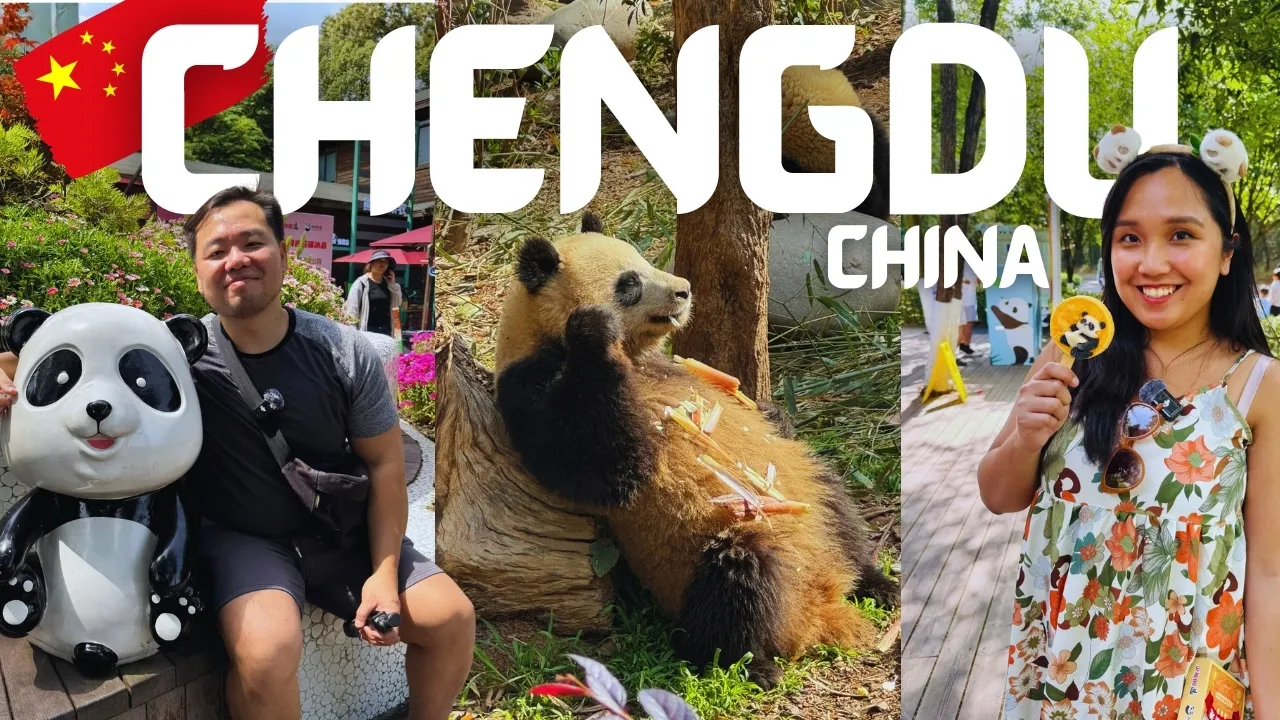
Paula and Henry start their Chengdu visit early, heading to the Chengdu Research Base of Giant Panda Breeding by train and panda-themed bus. They arrive before 8 AM and see that many other visitors have already come for the morning. A map helps them plan their route through the large grounds. They watch giant pandas eating and sleeping, and visit the red panda enclosure, where the animals move among bamboo and treehouses. Their visit includes information about conservation, efforts to reintroduce pandas into the wild and the development of newborn pandas.
Panda merchandise fills the shops, from plush toys to keychains. Paula and Henry note that prices inside the attraction can be high and that similar souvenirs may be less expensive, with more choice, outside. Chengdu's public transport is part of the trip too: they describe the metro as efficient and affordable, with a ride costing around $2 for 45–60 minutes. Tickets for the base can be reserved online, including through Trip.com, with passport details needed for booking.
People's Park, Kuanzhai Alley and dinner
After the pandas, the couple visits People's Park, where residents play chess, practice Tai Chi and drink tea. They also look at the Marriage Market. Parents display detailed profiles of their unmarried children in hopes of finding a suitable partner, and the vlog notes color-coded papers used to distinguish profiles. This stop offers a look at matchmaking customs and how families take part.
Kuanzhai Alley is a historic area that has become a marketplace for street food, crafts and souvenirs. Paula and Henry try local dishes, including spicy rabbit and pastries, and see traditional clothing available for photo rentals. They find the final alley quieter than the main lanes and notice cheaper souvenirs there. Their day closes at a Sichuan hot pot restaurant. They select broth and ingredients, then mix a dipping sauce with cilantro, garlic, green onions and peanuts. Dancers perform on a pond with swans during the meal. The route brings together wildlife, everyday life in the park, local customs, shopping and food, with personal observations at each stop.
At the research base, the map helps Paula and Henry plan how to move between the enclosures; the West and South entrances are options depending on the route. Tickets can be reserved online through Trip.com, using passport information for booking and entry. At the Marriage Market, the displayed profiles use different colors to distinguish men's and women's notices. These practical details sit alongside the couple's observations of pandas, park life, traditional lanes and the hot-pot dinner.
FAQs (From the traveler's perspective)
- Q: What is the best time to visit the pandas?
- A: Morning visits are recommended because the pandas are active and being fed then. Paula and Henry arrive before 8 AM and already see many visitors at the research base.
- Q: How can I buy tickets for the Panda Research Base?
- A: Tickets can be booked online in advance through platforms such as Trip.com. The booking requires passport information, and visitors typically show identification or a passport at entry.
- Q: Are souvenirs cheaper outside the Panda Research Base?
- A: Paula and Henry note that similar panda souvenirs, such as fridge magnets, can be found for about half the price outside the attraction, often with more variety than the shops inside.
- Q: Is Chengdu food very spicy?
- A: Chengdu food, especially Sichuan hot pot, can be very spicy. Many restaurants also offer non-spicy options, and diners can ask for less chili if they prefer milder food.
- Q: What is the Marriage Market?
- A: At People's Park, parents post detailed profiles of their unmarried children to look for potential partners. The vlog describes this as a local matchmaking practice and notes the color-coded papers on display.
- Q: What can I find in Kuanzhai Alley?
- A: The historic area now has street food, local crafts, souvenirs and traditional clothing rentals for photos. Paula and Henry try spicy rabbit and pastries and find a quieter last alley with cheaper souvenirs.
- Q: What is Sichuan hot pot like?
- A: Diners cook ingredients such as meat and vegetables in broth, which can be spicy, and often make a dipping sauce to suit their taste. Paula and Henry mix cilantro, garlic, green onions and peanuts for theirs.