Travel Guides & Tips in this video
Mike Okay visits Chongqing to learn about bang bang men, porters who use bamboo poles to carry goods through the city's steep terrain. He meets Mr. Lee, a 70-year-old former soldier, watches him seek jobs near a cruise terminal and follows a 10-yuan delivery in the rain. A home visit and conversation over baijiu offer a closer look at the work and the life behind it.
Next travel video:

More about the current video:()
A trade shaped by Chongqing's terrain
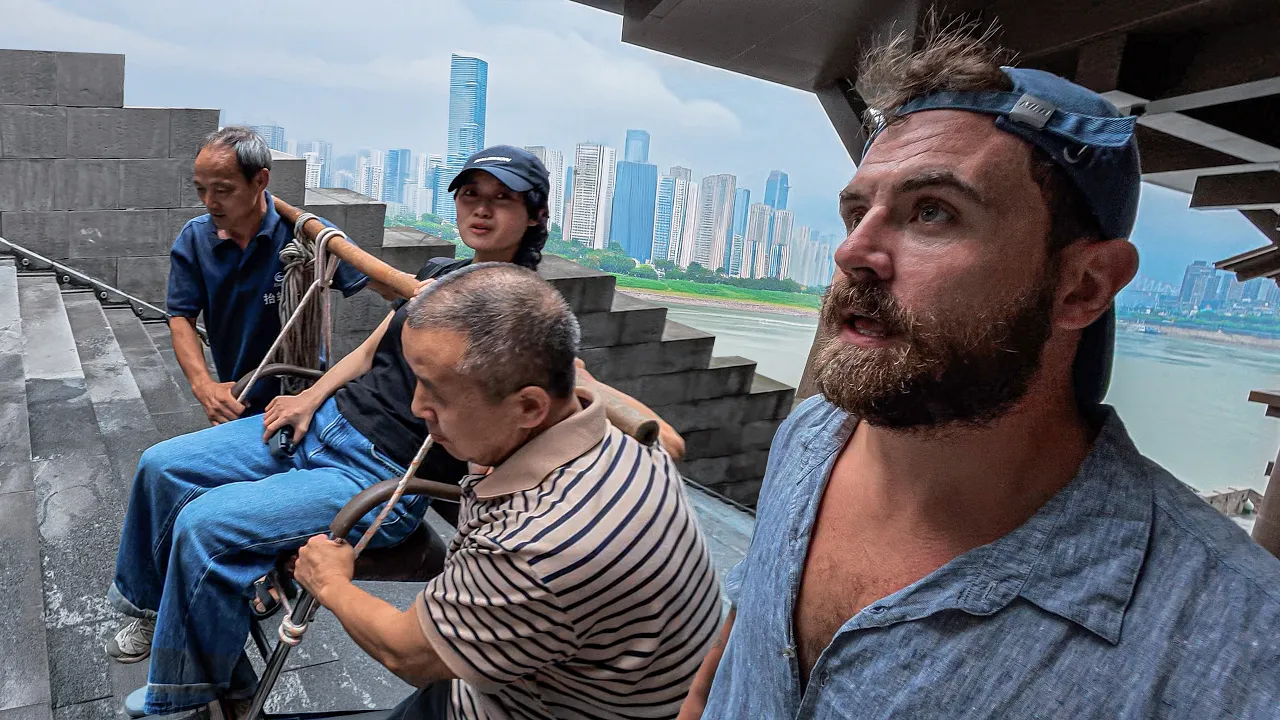
Chongqing is built across mountainous terrain, where steep streets have long made it difficult to move goods. Bang bang men use bamboo poles across their shoulders to carry luggage and other loads. Mike Okay meets Mr. Lee near the docks and cruise terminal, where porters wait for travelers who need help with bags. Mr. Lee is 70 and a former soldier. He describes carrying goods as a way to earn a living in a city that still has difficult routes.
Mike watches a porter offer to carry a passenger up the stairs for 10 yuan. He considers hiring Mr. Lee to carry his guide, who weighs less than 50 kilograms, but declines. The exchange shows the physical demands of the work and the pride Mr. Lee brings to it. The porters compete for customers' luggage near the cruise terminal, and Mike sees how a short job can be important income.
Fewer porters and a home visit
The number of bang bang men has fallen sharply. The account compares around 500,000 in the 1990s with fewer than 2,000 today, and says the work may disappear by 2030. Delivery trucks, elevators and e-commerce have reduced the need for carrying goods by hand. The remaining workers are older, with no young recruits. Mr. Lee's bamboo pole has been with him for 20 years.
Mike follows Mr. Lee as he runs across town to secure a 10-yuan delivery. Rain does not stop the job, and the journey highlights the effort behind a modest payment. Mr. Lee later invites Mike and Hong Lin to his home, a small apartment overlooking the city. The rent is 500 yuan per month. They share baijiu while Mr. Lee talks about his family, military service and how people view bang bang men.
Mike also reflects on the responsibility of documenting people facing hardship and says he will make a donation to the Chongqing Charity Foundation. The visit focuses on Mr. Lee's work and the historical role of porters in a city whose terrain required people to move goods by hand. It also shows how rapidly logistics and urban change have reduced the demand for this trade. Mike also learns about the wider decline of this work. The story contrasts a large number of porters in the 1990s with fewer than 2,000 today, and describes the expectation that the job could disappear by 2030. Trucks, lifts and online commerce have changed how goods move around the city. The porters who remain are older, and no younger workers are taking up the trade. Mr. Lee's bamboo pole has been his working companion for 20 years.
The home visit brings a quieter view after the streets and stairs. Mr. Lee's small apartment overlooks the city and costs 500 yuan a month. Over baijiu, he speaks about his family and military service, as well as the way society can regard porters as low-status workers. Mike considers the ethics of telling a story about hardship and says he plans a donation to the Chongqing Charity Foundation. His reflections frame the porters' work as an important part of how people moved goods in a city built across steep terrain.
FAQs (From the traveler's perspective)
- Q: How much does Mr. Lee charge to carry luggage?
- A: The stated rate is 10 yuan per piece of luggage.
- Q: How heavy was the person Mike considered hiring Mr. Lee to carry?
- A: The person weighed less than 50 kilograms.
- Q: How much did Mr. Lee earn for the delivery job Mike followed?
- A: The job paid 10 yuan, and Mike followed him through the rain as he worked to secure the delivery.
- Q: How old is Mr. Lee?
- A: Mr. Lee is 70 years old and is described as a former soldier.